
Rewriting Migraine Prevention: The Evidence for REN Beyond Acute Care
A clinical trial shows that remote electrical neuromodulation (REN) can safely and effectively reduce migraine frequency, offering a non-drug preventive option for patients with episodic and chronic migraine

For years, preventive migraine therapy has been a paradox. Clinicians recognize its importance, yet the vast majority of patients who would benefit never receive it. According to the American Headache Society, nearly 40% of people with migraine could benefit from preventive therapy, yet only 3-13% actually use it.[1] The reasons are well documented: limited efficacy, poor tolerability, contraindications and the ever-present risk of treatment fatigue from existing pharmacological treatments.
In short, preventive migraine care still needs a better balance between effectiveness, safety and sustainability, to maintain treatment adherence.
From Treatment to Training the Brain
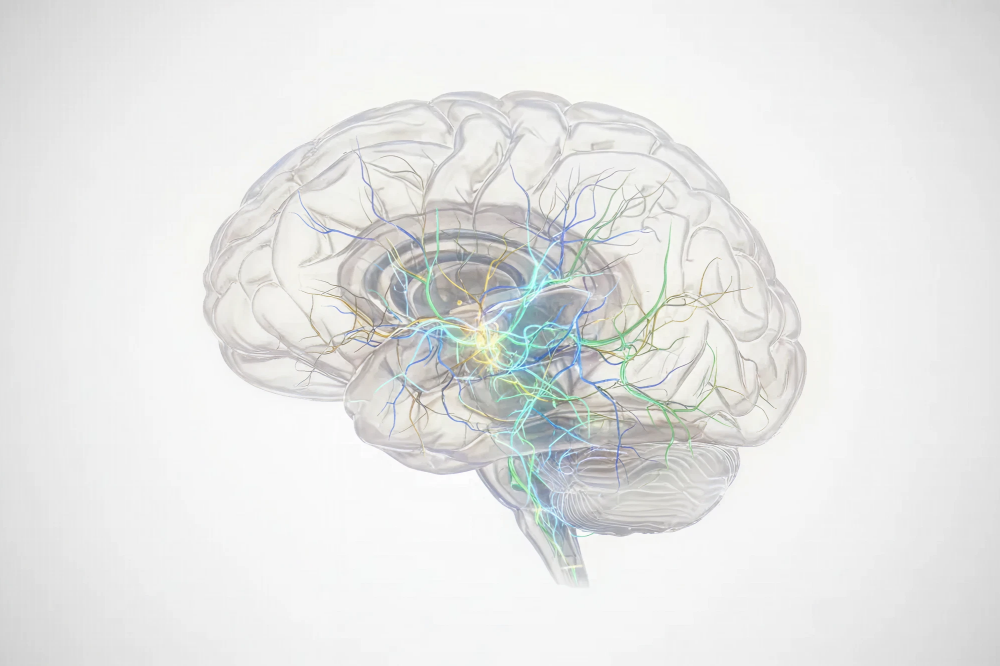
Remote Electrical Neuromodulation (REN) has already proven itself in the acute migraine setting, activating an endogenous mechanism known as controlled pain modulation (CPM): the body’s natural ability to inhibit pain through descending neural pathways.
But what happens when you repeatedly engage that mechanism? Not only when pain strikes, but preventively, every other day.
That’s the question a randomized, double-blind, placebo-controlled trial set out to answer. The hypothesis: that regular activation of CPM could “train” the nervous system, strengthening pain modulation networks and reducing migraine frequency over time.
The Study at a Glance
This large, multicenter trial enrolled 248 patients (mean age 41.7 years, 85.9% female), including both episodic and chronic migraine populations.[2] Participants applied REN, or placebo stimulation (sham device), to the upper arm every other day for 8 weeks, with outcomes assessed during the last 4 treatment weeks to capture the sustained preventive effect.
The primary endpoint (mean change in monthly migraine days) showed a statistically and clinically meaningful improvement:
- REN group: -4.0 ( ± 4.0) migraine days per month (a reduction of 4 migraine days per month)
- Placebo group: -1.3 (± 4.0)
- Therapeutic gain: 2.7 days (p <0.001)
Subgroup analysis confirmed significant results in both episodic (-3.2 vs -1.0; p = 0.003) and chronic migraine (-4.7 vs -1.6; p = 0.001) populations.
Beyond migraine-day reduction, REN demonstrated significant improvements across multiple secondary measures:
- Fewer moderate/severe headache days
- Reduced acute medication use
- Higher rates of ≥50% responder status for headache frequency
- Significant improvement in HIT-6 and MSQ quality-of-life scores
And, perhaps most notably, no systemic or serious device-related adverse events were reported.
A Preventive Approach That Complements, Not Competes
What’s striking is that the benefit of REN was consistent both in patients taking preventive medication and those who were not. This opens a meaningful new avenue for migraine management: using REN as a stand-alone, drug-free option for patients unable or unwilling to take medication, or integrating it as a complementary therapy to enhance preventive outcomes.
That flexibility matters, particularly for patients with high rates of comorbidities, contraindications or medication sensitivities. In a field where trial and error remains common, REN introduces a more mechanism-driven, neurophysiologically rational pathway for prevention.
From Episodic to Chronic, From Acute to Preventive
This study adds another layer of evidence to the growing body of REN research, reinforcing that this technology is not just an acute rescue tool, but a continuum of care approach.
By safely engaging the same central mechanisms involved in pain inhibition, REN has now demonstrated efficacy across the migraine spectrum, in acute, chronic and preventive contexts.
The implications for clinical practice are clear:
- For patients: a non-pharmacologic option that empowers consistent management without additional pill burden
- For clinicians: a validated, FDA-cleared therapy that can be prescribed flexibly: as a first-line preventive for some, or as a dual treatment for others.
This pivotal trial shows that REN, applied every other day, can significantly reduce migraine frequency, acute medication use and overall disease burden. Safely, and without systemic side effects.
